Laser solutions for battery manufacturing
Laser ablation and cutting for battery production
High-volume battery unwrapping
Non-contact laser ablation allows partial or full automation of the process and handling of cells of different shapes and sizes.
No loss or damage to metal
Our CO2 lasers ablate busbar or hairpin coatings without damage or loss of metal, and with literally no downtime for tooling.
Dust and tool wear-free cutting
Non-contact CO2 laser processing does not apply force to the thin film and coatings of battery separators.
Laser applications in battery production
From cells to cars: How lasers drive battery production forward
In the complex processes underlying battery production, the laser stands out as an indispensable tool for notching, slitting, surface functionalization and many other applications like stripping of isolator material or cutting of foils and separators.
Its versatility and precision make various tasks economically viable and expand the boundaries of what is technically possible.
Luxinar’s laser sources play a leading role in shaping battery cells or refining electronic components. The non-contact laser process eliminates chemicals and production delays caused by traditional tools, resulting in unmatched productivity.
Our CO2 lasers ablate battery films
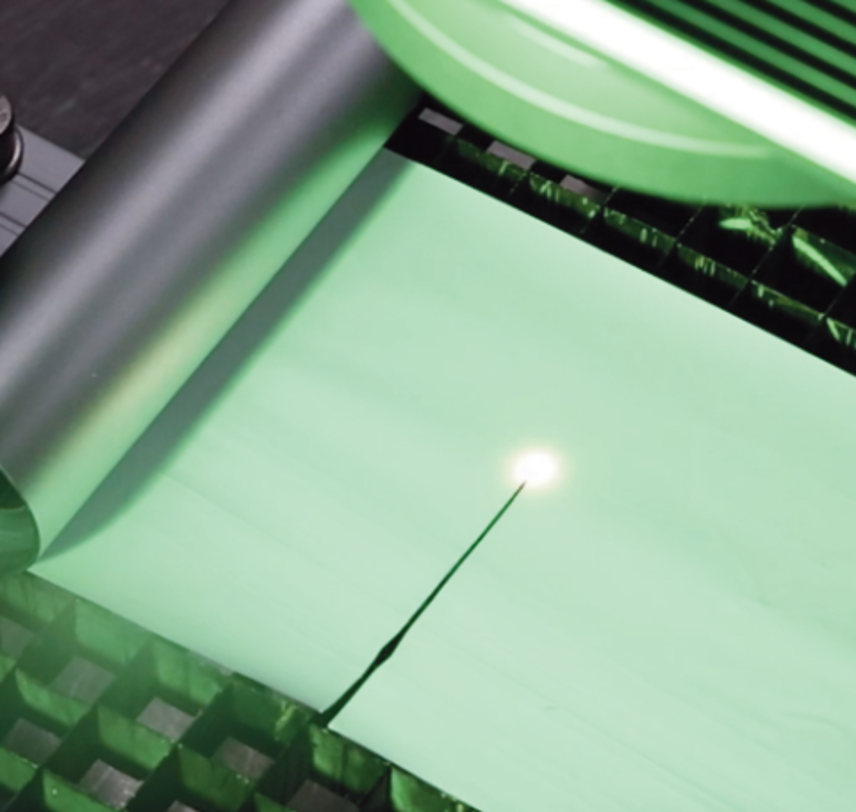
Laser ablation of battery films (unwrapping prismatic battery cells)
Prismatic, like other format cells in automotive applications, are often wrapped in self-adhesive PET heat shrink film. This film might need selective or complete removal:
- to add heat management components to the bare metal of the can
- to rework non-conforming cells in the production cycle
- to recycle the battery at the end of its life
These processes are primarily performed manually, involving the use of knives to cut the foil and scrape it off, followed by the removal of residues with solvents. This mechanical and chemical process leaves a clean but scratched surface.
Non-contact laser processing allows partial or full automation of the process and handling of cells of different shapes and sizes in high volumes.
A Luxinar CO2 laser source is used with a galvo scanner to ablate the film, leaving only an invisible, thin layer of residue on the bare metal that can be removed by simply wiping it with isopropanol. The laser ablation process avoids the need for harsh solvents and intensive mechanical effort.
A three-axis scanner with one laser can process three surfaces, and two lasers with a scanner will process all six sides of the battery.
Recommended products: OEM series
Our CO2 lasers ablate hairpin coatings
Laser ablation of busbar and hairpin coatings
Busbars are made of metal, typically copper or aluminium, and are used in electric vehicles for power distribution and to connect high or low voltage equipment in battery banks. They conduct a large amount of electricity and have an epoxy coating for insulation. This coating must be partially removed so that the busbars can electrically connect to other components in the vehicle.
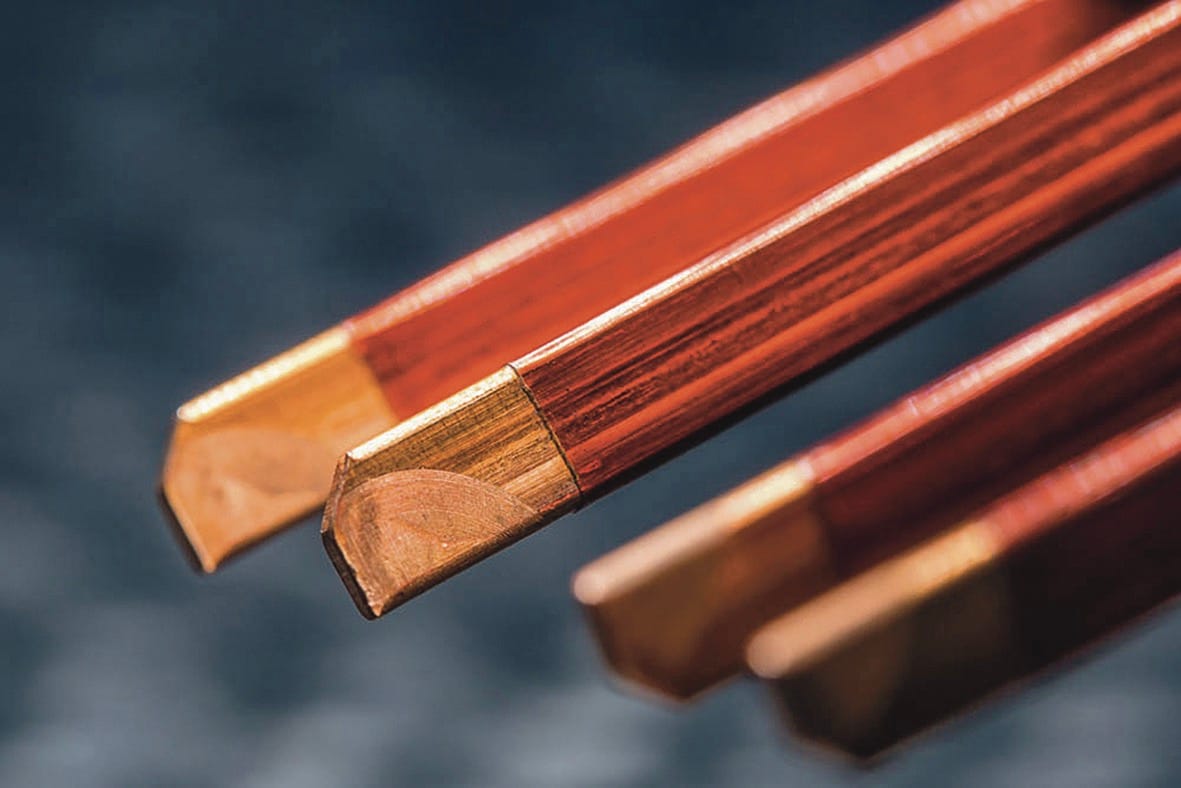
Electric vehicle motors use copper “hairpins”, rectangular copper wires up to 6 mm wide coated with a dielectric enamel (PEEK, PFA-PI, PA), to provide electrical isolation; this enamel must be partially removed so that the hairpins can be welded for electrical contacting.
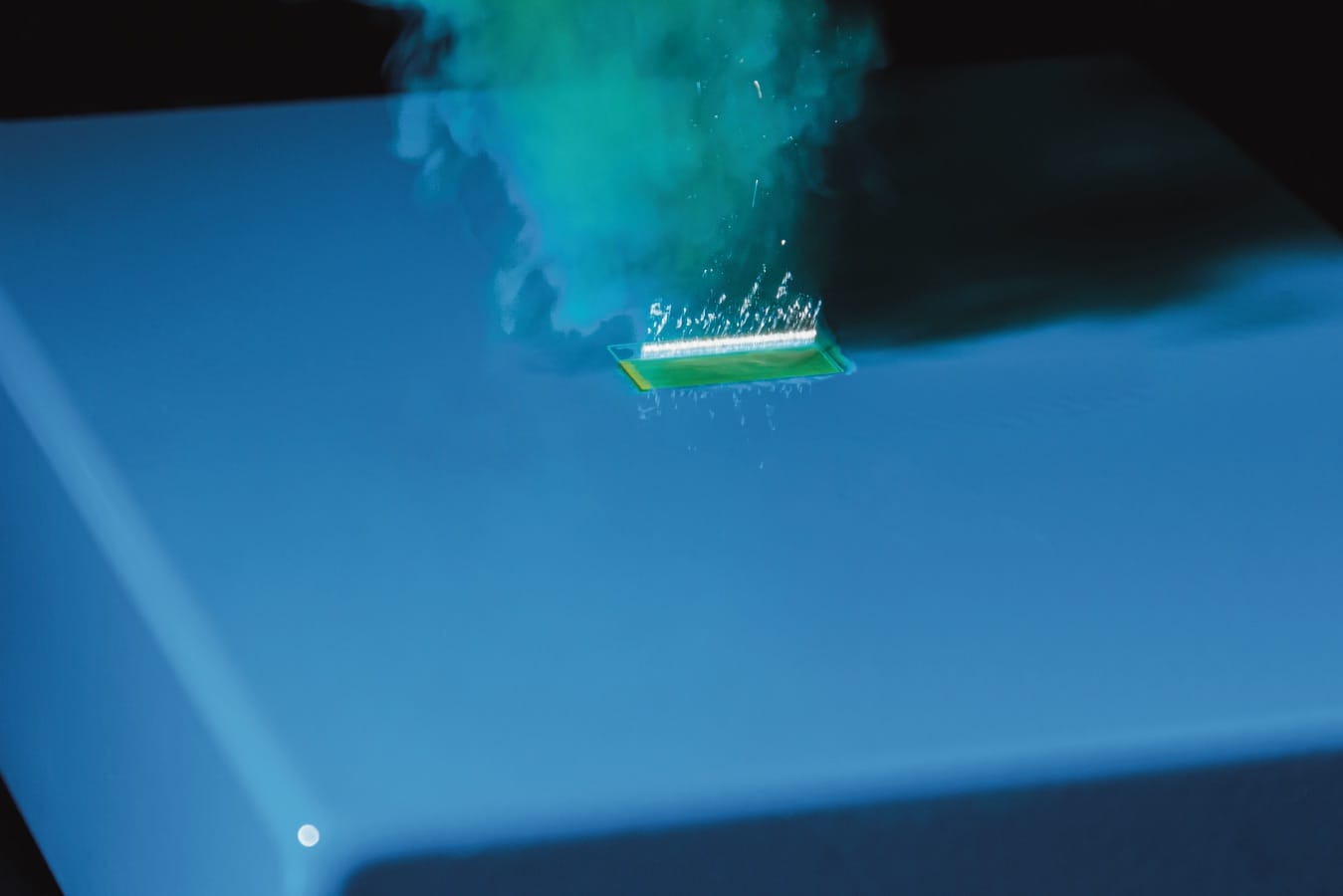
Unlike mechanical methods, laser ablation is contactless, without ablation or loss of metal, and with very little downtime or tooling needed for any changes. A galvanometer scanner passes the laser beam over the required area; in this way, two lasers can be used to process all sides simultaneously while leaving the metal undamaged.
Enamel laser ablation using our CO2 lasers is a very fast process. Removal rates depend on the type and thickness of coating, as well as the coating method (cross layer), but there is no material loss (cost of copper or aluminum) when a CO2 laser is used.
Recommended products:
Busbar ablating: OEM series
Hairpin ablating: SR series, MULTISCAN® HE, MULTISCAN® VS
Find the best laser solution for your battery production process.
Our CO2 lasers cut battery separators
Laser cutting battery separators – with or without a ceramic coating
Separator foils are made from plastic film at thicknesses below 30 µm; they are cut to length mainly by mechanical cutters and prohibit short circuits between the electrically charged layers of electrodes.
Newer developments of battery separator foils utilize a thin layer of ceramic coating applied to one side of the film.
Cutting by knife increases wear on the tools, and small ceramic particles chip off from the cutting edge, leading to dust pollution on the film.
Cutting these films by laser eliminates dust and tool wear since laser cutting is a non-contact process that does not apply force to the thin film and coating.
Recommended products: MULTISCAN® HE, SR series, Eternity, Infinity