Plastic processing
Laser cut plastic: cutting and marking with CO₂ lasers
Fast, flexible and efficient
Laser cut plastic automotive parts with our CO2 lasers and robot systems in a fully automated process.
Cuts with a perfect flame-polished finish
Our CO2 lasers cut acrylic with clean, sharp edges, eliminating the need for post-processing.
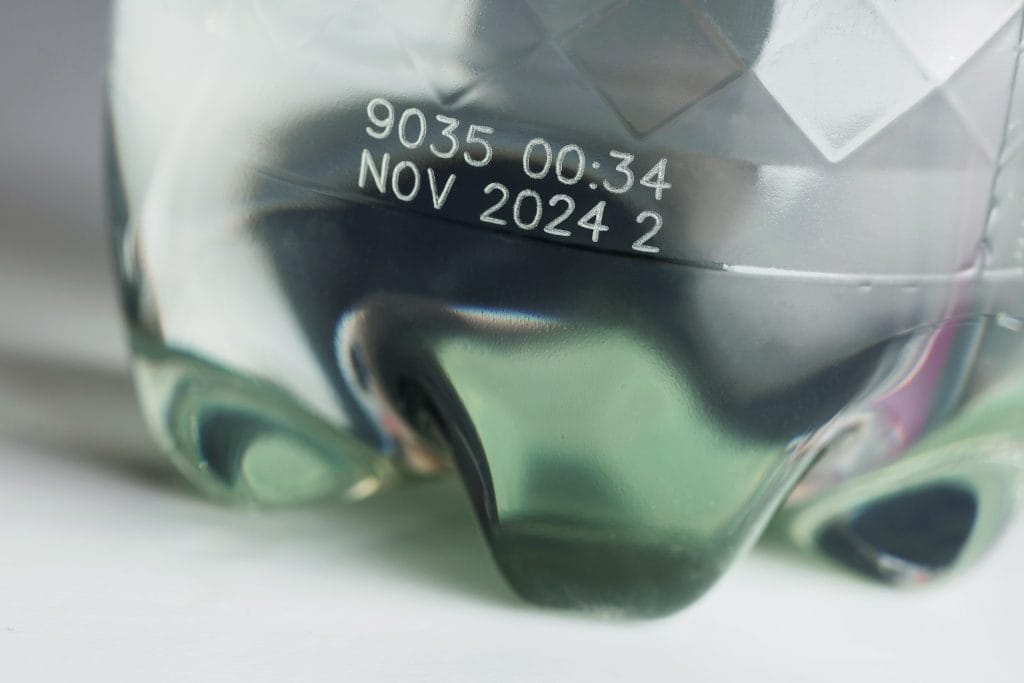
Indelible marks on bottles
CO2 laser marking production data on plastic drinks bottles is permanent and tamper-proof.
Plastic cutting and marking
Precise CO₂ laser processing for a broad range of plastic materials
Our versatile CO₂ lasers can laser cut a wide range of plastic materials for applications in packaging, displays, automotive, and more. Laser processing is both flexible and efficient. Additionally, the high absorption and low thermal conductivity of these materials ensure that minimal energy is wasted.
To optimize results, we offer CO₂ lasers at three different wavelengths, and consequently, we can assist you in selecting the best one for your specific application, ensuring a tailored solution that meets your unique needs.
Our CO2 lasers cut plastic automotive parts
General cutting applications for laser cut plastic
Plastics are widely used in the world today – applications include automotive parts, signage, medical devices, packaging, lighting, white goods, furniture, electronic devices, and many more.
CO2 laser cutting of plastics is a very efficient process; high absorption and low thermal conductivity means that little energy is wasted. However, plastics are a diverse group of materials, and the results depend strongly on the type and chemical composition of the plastic in question.
Laser cutting plastics works particularly well with thermoplastic materials, which can generally be cut cleanly – these include acrylic, polyethylene, polystyrene, polypropylene, PET, polyurethane and ABS.
Recommended products: SR 10i, SR 15i, SR 25i, SCX 35, OEM 45iX, OEM 65iX

Our CO2 lasers trim plastic headlamp housings to remove injection molding waste
Plastic cutting (automotive applications)
Plastics are commonplace in the automotive industry today. Materials such as ABS, PC/ABS and polypropylene may be used for bumpers, dashboards, and interior pillars, while transparent polycarbonate and acrylic materials can be found in headlight lenses and other components.
To laser cut plastic components precisely, lasers are often used in conjunction with robot systems to follow the contours of 3-dimensional parts. Holes can be cut in dashboards and pillars, edges can be trimmed, and waste material left by the injection molding process can be removed.
Laser processing is fast, flexible and consistent, and robot cells can often be fully automated to increase productivity.
Recommended products: SR 10i, SR 15i, SR 25i, SCX 35, OEM 45iX, OEM 65iX

Our CO2 lasers cut complex shapes from acrylic with ease
Acrylic cutting
Our lasers can cut plastic acrylic with a perfect flame-polished finish, eliminating the need for post-processing. The laser vaporises the plastic, leaving clean, sharp edges as it cuts.
Laser cutting is ideal for applications where appearance is paramount. Acrylic is available in a wide range of colours, and can be used for signage, point of sale displays, costume jewellery, trophies and awards, ornamental items, lighting… the creative possibilities are endless.
Recommended products: SR 10i, SR 15i, SR 25i, SCX 35, OEM 45iX, OEM 65iX, OEM 100iX

Find the best laser solution for cutting and marking plastics.
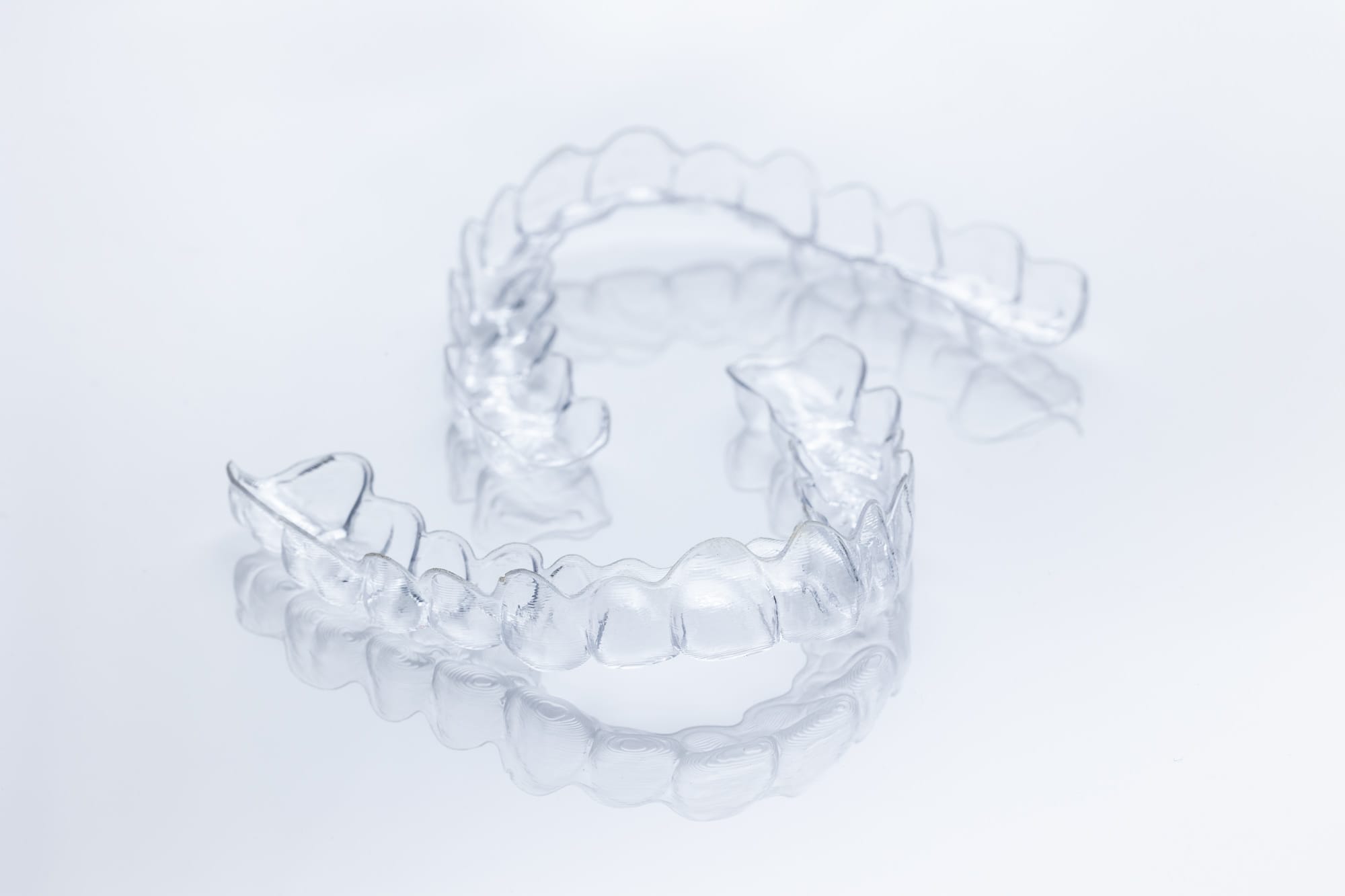
Our CO2 lasers cut plastic dental aligners
Dental aligner cutting
Clear orthodontic aligners are a popular alternative to fixed metal braces to correct crooked teeth. A series of custom-molded plastic aligners move the teeth, with typical wear times of up to two weeks per aligner. As average treatment times are just over a year, each patient requires at least 30 aligners to achieve the desired results.
When clear aligner technology was in its infancy, they were made mainly by hand. Now lasers can cut aligners they significantly reduce manufacturing time and cost and improve consistency.
Clear aligners are made from a range of transparent thermoplastic polymers, including medical grade polyurethane, PET and polypropylene. All these materials absorb strongly at the CO2 laser wavelength, making our CO2 lasers ideal for cutting the aligners. A smooth, high-quality cut is essential in this application, reducing the amount of hand finishing required; any imperfections would cause discomfort for the patient.
The SR 08s is recommended for this application, delivering up to 80 W average power at 10.6 µm and 9.3 µm wavelengths.
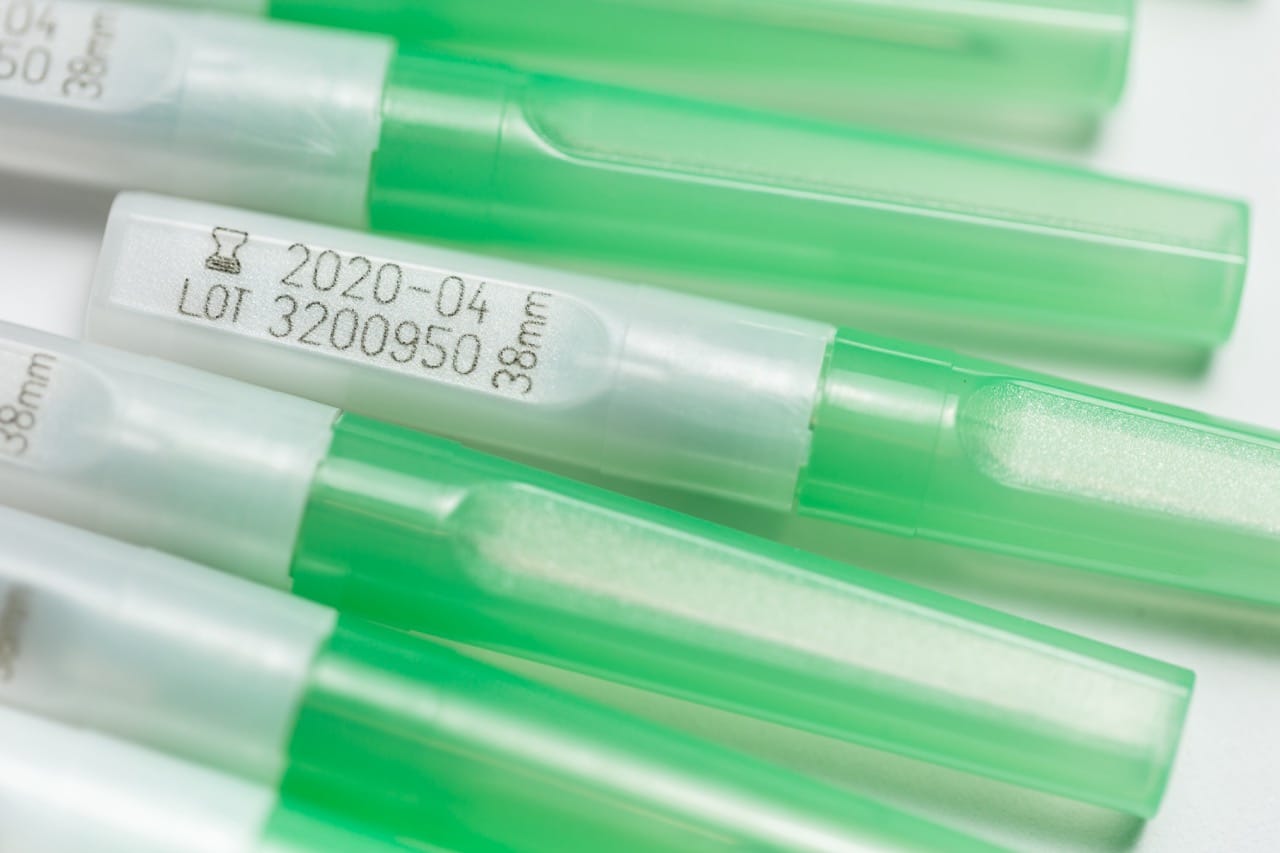
Our CO2 lasers mark plastic syringe covers
Plastic marking
Laser marking plastics cover a wide range of plastic products, from packaging films and bottles to medical devices. The appearance of the mark depends strongly on the type of plastic used.
In many cases, the laser induces no color change in the plastic, resulting in an engraved mark which is unobtrusive and does not spoil the appearance of the product. Special additives can be used when laser marking plastics requires a more visible mark with high contrast. This also happens with many pearlized plastics, as well as PVC.
Recommended products: MULTISCAN® VS, MULTISCAN® HE
Our CO2 lasers mark PET water bottles
PET bottle marking
Plastic bottles are widely used in the soft drinks industry, and are most often made from PET (polyethylene terephthalate), a clear, strong, lightweight and food-safe plastic. CO2 laser codes applied to PET bottles are indelible and tamper-proof. Coding directly on the plastic bottles means that the information is preserved, even if the label is removed.
PET responds particularly well to the 9.3 µm wavelength, which makes marks with enhanced contrast and higher visibility. Best before dates, batch codes and other information can be applied on the fly, using a high-speed galvo system to track the products on the production line.
Recommended products: MULTISCAN® VS, MULTISCAN® HE